
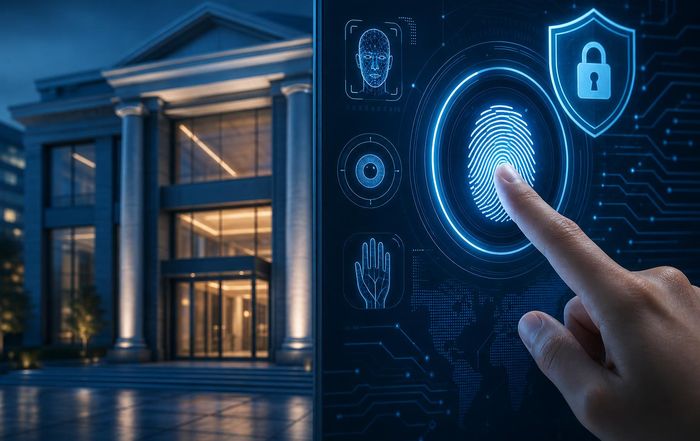
The Future of Biometric Security in Banking
Biometric Banking in 2026: From Experiment to Infrastructure
By 2026, biometric security has moved from an experimental add-on to a core component of global banking infrastructure, reshaping how individuals and businesses in the United States, Europe, Asia, Africa and beyond authenticate identity, access financial services and manage risk. What began as simple fingerprint login on smartphones has evolved into a multilayered biometric ecosystem that underpins digital banking, payments, trading, and even regulatory compliance, with banks, regulators and technology providers converging on the view that traditional password-based security is no longer sufficient in the face of increasingly sophisticated cyber threats and rapidly expanding digital financial ecosystems.
For the global audience of FinanceTechX.com, which spans fintech innovators, banking executives, founders, regulators and institutional investors, understanding the future of biometric security is no longer a theoretical exercise; it is a strategic imperative that touches everything from product design and customer experience to capital allocation, cross-border expansion and risk management. As biometric systems become embedded into mobile banking platforms, branch operations, call centers, ATMs, trading terminals and corporate treasury workflows, they are redefining not only how security is delivered but how trust itself is established in a highly connected, data-driven financial world.
Why Biometrics Became Mission-Critical for Banking
The acceleration of biometric adoption in banking has been driven by the convergence of three structural forces: the digitization of financial services, the escalation of cybercrime, and rising customer expectations for seamless, secure experiences across devices and channels. The global shift toward mobile and online banking, particularly in markets such as the United States, United Kingdom, Germany, Singapore and South Korea, has created an environment where billions of authentication events occur daily, making static credentials like passwords and PINs both operationally cumbersome and increasingly vulnerable to phishing, credential stuffing and social engineering attacks.
Institutions such as the World Bank highlight how digital financial services have expanded access to banking in emerging markets, but this expansion has also broadened the attack surface for fraudsters. At the same time, cybersecurity reports from organizations like ENISA and the Cybersecurity and Infrastructure Security Agency (CISA) show a steady rise in account takeover attempts, synthetic identity fraud and deepfake-enabled social engineering, which exploit weaknesses in knowledge-based authentication and legacy verification processes. Learn more about evolving cyber risk landscapes through resources provided by ENISA and CISA.
Against this backdrop, biometric authentication-fingerprints, facial recognition, voice biometrics, iris and palm vein scanning, and increasingly behavioral biometrics-offers banks a way to bind identity to the individual rather than to a password or device, providing stronger assurance that the person initiating a high-risk transaction, accessing a trading platform or approving a corporate payment is who they claim to be. For readers tracking innovation across fintech and banking verticals on FinanceTechX.com, this shift is central to understanding how digital products are being architected and regulated in 2026.
The Core Biometric Modalities Shaping Banking
The current landscape of biometric security in banking is defined by the interplay of several modalities, each with distinct strengths, limitations and adoption patterns across regions and use cases. Fingerprint recognition remains the most widely deployed biometric in consumer banking, largely because of its integration into smartphones and payment cards; institutions from the United States to India have leveraged device-native fingerprint sensors for mobile banking login and transaction authorization, while card schemes and issuers in Europe and Asia have piloted biometric payment cards with integrated fingerprint sensors to reduce friction at point-of-sale terminals.
Facial recognition has gained prominence as a front-door technology for digital onboarding, remote identity verification and step-up authentication for high-value transactions, particularly in markets with strong digital identity frameworks such as Singapore, the Nordics and parts of the European Union. The evolution of liveness detection and anti-spoofing techniques, often supported by standards from bodies like the FIDO Alliance and guidance from NIST, has made facial biometrics more resilient against photo and video spoofing, though the rise of deepfakes continues to challenge providers to innovate. Readers can explore technical guidance on digital identity at NIST and interoperability standards at the FIDO Alliance.
Voice biometrics has become increasingly relevant in call center banking, wealth management and corporate banking interactions, where verifying identity over the phone has traditionally relied on easily compromised knowledge-based questions. Major institutions in North America, the United Kingdom and Australia have deployed passive voice biometrics that authenticate customers during natural conversation, reducing friction while combatting social engineering. Iris and palm vein recognition, while less common in retail banking, have found specialized use in high-security environments such as vault access, data centers and premium corporate banking suites, especially in Japan, South Korea and parts of the Middle East, where privacy norms and infrastructure investment patterns differ.
Perhaps the most transformative development for 2026 is the maturing of behavioral biometrics, which analyzes patterns of user behavior-typing rhythm, mouse movements, touchscreen pressure, device orientation and navigation habits-to create a dynamic risk profile. Banks and fintechs are increasingly layering behavioral biometrics on top of physical biometrics, using machine learning models to continuously assess whether the person interacting with a digital channel behaves like the legitimate account holder. This form of continuous, invisible authentication is particularly relevant for digital-only banks and trading platforms, and aligns closely with the AI-driven security trends explored on FinanceTechX AI coverage.
Regulatory and Compliance Forces Reshaping Biometric Adoption
The regulatory environment in 2026 is one of the most important determinants of how quickly and extensively biometric security is deployed across banking, especially in heavily regulated markets such as the European Union, the United Kingdom, the United States, Singapore and Australia. Regulatory frameworks like the European Union's General Data Protection Regulation (GDPR) and the evolving EU AI Act impose strict requirements on the processing of biometric data, treating it as a special category of personal data that demands explicit consent, data minimization and robust security controls. Learn more about data protection obligations through resources provided by the European Commission and the European Data Protection Board.
In payments, the Revised Payment Services Directive (PSD2) and its Strong Customer Authentication requirements have accelerated the use of biometrics as a convenient way to satisfy multi-factor authentication, particularly in the European Economic Area. Similarly, regulators like the UK Financial Conduct Authority (FCA), the Monetary Authority of Singapore (MAS) and the Office of the Comptroller of the Currency (OCC) in the United States have issued guidance encouraging risk-based authentication and robust identity verification for remote onboarding, which banks often meet using biometric and document verification technologies. Readers interested in regulatory developments can explore materials from the FCA and MAS.
At the same time, global standard-setting bodies such as the Bank for International Settlements (BIS) and the Financial Stability Board (FSB) are examining the systemic implications of large-scale biometric deployment in financial services, including interoperability, cross-border data flows and concentration risk when many institutions rely on a small set of biometric vendors. Reports from organizations like the International Monetary Fund (IMF) and OECD emphasize that while biometrics can significantly reduce fraud and operational risk, they also introduce new categories of model risk, privacy risk and vendor dependency that must be reflected in banks' risk management frameworks. Learn more about emerging regulatory perspectives from the BIS and IMF.
For the FinanceTechX.com audience following developments in economy and world markets, these regulatory dynamics are not merely compliance considerations; they influence where and how banks launch new biometric-enabled products, how cross-border digital banking strategies are structured, and how fintech founders design platforms that can scale across jurisdictions without running afoul of local data protection and AI governance rules.
AI, Deep Learning and the Next Generation of Biometric Intelligence
The future of biometric security in banking is inseparable from the broader evolution of artificial intelligence and deep learning, which now underpin virtually every advanced biometric system deployed by major financial institutions and fintech platforms. Convolutional neural networks, transformer architectures and multimodal learning models have dramatically improved the accuracy, speed and resilience of biometric recognition, enabling systems to operate under challenging conditions such as low light, background noise, partial occlusion or degraded network connectivity, which are common in real-world banking environments from New York and London to Lagos and São Paulo.
Banks increasingly rely on AI-driven liveness detection to differentiate between a real human face or voice and a spoofed presentation using photos, videos, masks or synthetic media, a capability that has become essential as generative AI tools make it easier to create convincing deepfakes. Research from organizations like MIT, Stanford University and Carnegie Mellon University has contributed to advances in adversarial robustness, helping biometric systems withstand attempts to fool models with carefully crafted inputs. Learn more about AI research trends through resources such as MIT CSAIL and Stanford HAI.
At the same time, banks and fintechs are embracing privacy-preserving machine learning techniques-federated learning, homomorphic encryption and secure enclaves-to train and deploy biometric models without centralizing raw biometric data in a single repository. These approaches aim to reconcile the need for powerful AI models with the imperative to minimize data exposure, a balance that is increasingly scrutinized by regulators, privacy advocates and institutional clients. For readers interested in the intersection of AI and security, FinanceTechX.com provides ongoing analysis of how AI-driven identity systems are reshaping security strategies across the financial sector.
The integration of AI into biometric security also raises important governance questions, including model explainability, bias mitigation and human oversight, especially when biometric decisions influence access to critical financial services. Institutions are under pressure from regulators, civil society and their own boards to demonstrate that biometric systems do not systematically disadvantage particular demographic groups, and that there are clear recourse mechanisms when authentication fails or is disputed. These concerns are prompting banks to invest in multidisciplinary teams that combine data science, cybersecurity, legal, ethics and product expertise, reflecting the Experience, Expertise, Authoritativeness and Trustworthiness that business audiences expect from leading financial institutions and from analysis on FinanceTechX.com.
Customer Experience, Trust and the Business Case for Biometrics
While the technical and regulatory dimensions of biometric security are critical, the long-term success of biometric adoption in banking depends on customer trust and perceived value, both for retail consumers and corporate clients. In markets such as the United States, Canada, the United Kingdom and Australia, surveys from organizations like Deloitte, McKinsey & Company and PwC indicate that customers increasingly expect frictionless digital experiences, and are willing to adopt biometrics if they perceive them as secure, convenient and under their control. Learn more about digital customer expectations through insights from Deloitte and McKinsey.
For banks and fintechs, the business case for biometrics is multifaceted. Biometric authentication can reduce fraud losses, lower call center and branch authentication costs, and streamline onboarding, thereby improving customer acquisition and retention metrics. In corporate and institutional banking, biometrics can simplify complex authorization workflows for treasury operations, trade finance and capital markets transactions, where multiple signatories and high-value transfers demand robust verification. At the same time, poorly implemented biometric systems-those that are unreliable, intrusive or opaque about data usage-can erode trust, trigger regulatory scrutiny and damage brand reputation.
This is where the editorial focus of FinanceTechX.com on business strategy and founders becomes particularly relevant. Founders of fintech startups and digital banks must make early architectural decisions about whether to build biometric capabilities in-house, partner with specialized vendors, or leverage platform ecosystems provided by cloud hyperscalers and identity-as-a-service providers. These choices affect not only time to market and cost structures but also data governance, vendor lock-in and the ability to differentiate on security and user experience in highly competitive markets from New York and London to Berlin, Singapore and São Paulo.
Global Adoption Patterns and Regional Nuances
The trajectory of biometric security in banking is not uniform across regions, reflecting differences in regulatory frameworks, cultural attitudes toward privacy, levels of digital infrastructure and the structure of local financial systems. In Europe, particularly in countries like Sweden, Norway, Denmark, the Netherlands and Finland, strong digital identity ecosystems and high smartphone penetration have enabled rapid adoption of biometric authentication for banking and payments, often integrated with national e-ID schemes and supported by government-backed trust frameworks. Learn more about digital identity initiatives via resources from the European Union's digital strategy.
In Asia, markets such as Singapore, South Korea, Japan and China have become laboratories for advanced biometric deployments, including face-pay systems, biometric ATMs and integrated biometric identity platforms that span banking, transportation and public services. In India, large-scale identity systems have enabled banks and fintechs to authenticate customers biometrically for account opening and subsidy distribution, though these deployments have also sparked debates about privacy, surveillance and exclusion. In North America, adoption has been driven more by commercial innovation and platform ecosystems, with major banks partnering with technology providers to embed biometrics into mobile apps, call centers and branch experiences.
Africa and South America present a diverse picture, with some countries such as South Africa, Brazil and Nigeria leveraging biometrics to extend financial inclusion, combat ghost accounts and secure government-to-person payments, while others face infrastructure constraints that slow deployment. International organizations like the World Bank and Alliance for Financial Inclusion (AFI) have highlighted how biometrics, when responsibly implemented, can support inclusive finance in emerging markets by providing robust identity verification for populations without traditional documentation. Learn more about inclusive finance strategies through the World Bank and AFI.
For readers of FinanceTechX.com tracking world and economy trends, these regional nuances underscore that there is no single global model for biometric banking. Instead, institutions must tailor their biometric strategies to local regulatory, cultural and infrastructural realities while maintaining a coherent global risk and technology architecture that can support cross-border clients and multi-jurisdictional operations.
Biometric Security, Jobs and the Changing Talent Landscape
The rise of biometric security in banking is reshaping the talent landscape, creating new roles and skill requirements at the intersection of cybersecurity, data science, risk management, legal compliance and product design. Banks and fintechs now seek professionals who understand not only traditional information security but also biometric modalities, machine learning, privacy engineering and human-computer interaction, reflecting a broader trend toward interdisciplinary expertise in financial technology.
Roles such as biometric security architect, AI model risk manager, digital identity product owner and privacy-by-design lead are becoming more common in job postings across North America, Europe and Asia-Pacific, as institutions recognize that deploying biometrics at scale requires coordinated expertise across technology, risk, legal and customer experience domains. For professionals and students exploring opportunities in this evolving field, FinanceTechX.com's focus on jobs and education provides a lens into how the skills landscape is changing and where new career paths are emerging.
At the same time, biometric automation is altering the nature of some traditional banking roles, particularly in branches and call centers, where manual identity verification processes are increasingly augmented or replaced by biometric systems. While this can improve efficiency and reduce fraud, it also requires thoughtful workforce planning, upskilling and change management to ensure that employees can transition into higher-value advisory and relationship-driven roles where human judgment and empathy remain essential.
Intersection with Crypto, Stock Markets and Green Finance
Biometric security is not confined to traditional retail and corporate banking; it is also reshaping adjacent domains such as cryptocurrency, stock exchanges and sustainable finance. In the crypto ecosystem, exchanges, wallet providers and decentralized finance platforms are increasingly integrating biometric authentication into their interfaces, particularly when interacting with regulated on-ramps and off-ramps in jurisdictions like the United States, the European Union and Singapore. While the underlying blockchain protocols remain pseudonymous, the user interfaces that connect retail and institutional investors to crypto assets are adopting biometrics to satisfy know-your-customer and anti-money-laundering requirements, as well as to protect against account takeover. Readers can explore broader crypto trends via FinanceTechX crypto coverage.
In public markets, stock exchanges and brokerage platforms are leveraging biometrics to secure trading accounts, authorize high-value trades and protect access to market-sensitive information, particularly as algorithmic and high-frequency trading systems become more interconnected and as remote work remains prevalent among traders and analysts in cities like New York, London, Frankfurt, Tokyo and Hong Kong. Insights into these developments intersect naturally with FinanceTechX.com's focus on the stock exchange and capital markets innovation.
Biometric security also intersects with green and sustainable finance in less obvious but increasingly important ways. As banks and asset managers commit to environmental, social and governance (ESG) goals, they are under pressure to ensure that their digital transformation, including biometric deployments, aligns with responsible data practices, energy-efficient infrastructure and inclusive access. Learn more about sustainable business practices through resources from the UN Environment Programme Finance Initiative and explore how these themes connect to green fintech and environment coverage on FinanceTechX.com.
Strategic Imperatives for Banks and Fintech Founders
Looking ahead from 2026, the future of biometric security in banking will be shaped by how effectively institutions translate technological possibilities into trusted, scalable and interoperable solutions that align with evolving regulation, customer expectations and competitive dynamics. For incumbent banks, this means treating biometric security not as a discrete IT project but as a strategic capability embedded across digital transformation programs, risk frameworks and customer experience initiatives. It involves rigorous vendor due diligence, robust governance of AI and biometric models, and clear communication with customers about how their biometric data is collected, stored, used and protected.
For fintech founders and digital-only banks, biometrics represent both an opportunity and a responsibility. They can differentiate offerings by delivering seamless, secure onboarding and transaction experiences, particularly for cross-border and high-risk use cases, but they must also navigate complex regulatory landscapes and build trust in markets where brand recognition is still developing. The most successful founders will be those who integrate biometric security into their value proposition from day one, designing products that respect privacy, anticipate regulatory scrutiny and scale gracefully across markets such as the United States, United Kingdom, Germany, Singapore, Brazil and South Africa.
For regulators and policymakers, the challenge will be to foster innovation while safeguarding rights and system stability, developing frameworks that encourage interoperability and competition among biometric providers, promote transparency and accountability in AI-driven identity systems, and ensure that biometric security does not become a barrier to financial inclusion or a tool for unchecked surveillance. International coordination through bodies like the BIS, FSB, IMF and OECD will be essential to harmonize approaches and avoid a fragmented global landscape that complicates cross-border banking and capital flows.
For the global business audience of FinanceTechX.com, the message is clear: biometric security is becoming a foundational layer of the financial system, influencing product strategy, regulatory risk, operational resilience and customer trust across banking, payments, capital markets, crypto and beyond. Those who understand its technological underpinnings, regulatory context, regional variations and strategic implications will be better positioned to navigate the next decade of financial innovation, whether they sit in boardrooms in New York and London, startup hubs in Berlin and Singapore, or emerging fintech ecosystems in Nairobi, São Paulo and Johannesburg.
As biometric technologies continue to evolve, and as AI, quantum computing and digital identity frameworks reshape the security landscape, FinanceTechX.com will remain focused on delivering in-depth analysis, global perspectives and practical insights that help decision-makers in fintech, banking and the wider financial industry make informed, forward-looking choices about how to build the next generation of secure, inclusive and sustainable financial services.
