
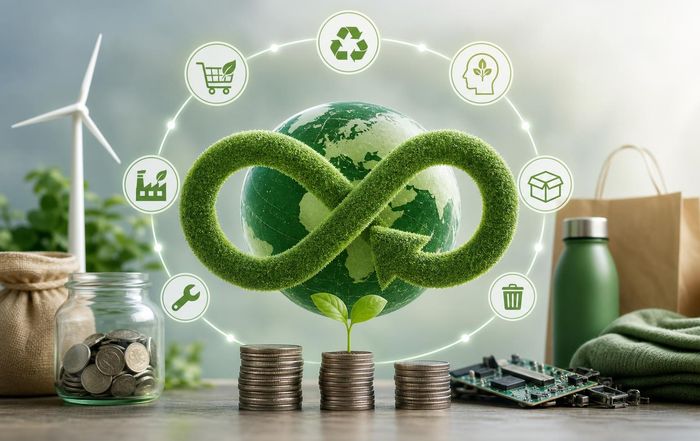
Financing Circular Economy Business Models - Capital, Credibility and Competitive Advantage
The Huge Potential Shift From Linear to Circular Finance!
The global conversation around sustainability and growth has moved decisively from abstract commitments to concrete capital allocation, and nowhere is this more evident than in the financing of circular economy business models. For the Financial news, savvy demographic that is loyal to FinanceTechX, which spans founders, investors, financial institutions and policy leaders across North America, Europe, Asia and beyond, the central question is no longer whether circularity matters, but how it can be financed at scale, under disciplined risk frameworks, and with clear pathways to profitability and liquidity.
The circular economy, defined by institutions such as the Ellen MacArthur Foundation as an economic system that eliminates waste and pollution, circulates products and materials at their highest value, and regenerates nature, has moved from niche experimentation to mainstream strategic planning. Leading corporates in the United States, United Kingdom, Germany, the Nordics, Singapore and Japan now embed circularity in their core strategies, while regulators in the European Union, the United States and Asia-Pacific steadily tighten requirements on waste, extended producer responsibility and climate-related disclosures. Readers can explore how these policy shifts interact with financial markets through the broader macro coverage available at FinanceTechX Economy.
Yet the financing architecture has lagged behind the ambition. Circular business models, whether in advanced recycling, product-as-a-service, industrial symbiosis, remanufacturing or regenerative agriculture, often do not fit cleanly into traditional project finance, venture capital or corporate lending templates. They straddle asset-heavy and asset-light models, combine technology risk with market adoption risk, and frequently depend on regulatory clarity that is still evolving. This article examines how capital providers and innovators are closing that gap in 2026, which instruments are emerging as credible standards, and what founders and financial institutions must do to demonstrate experience, expertise, authoritativeness and trustworthiness in this fast-maturing field.
Why Circular Economy Finance Has Become a Board-Level Issue
The elevation of circular economy finance to a board-level and investment committee priority is driven by multiple converging forces. First, there is the hard macroeconomic reality of resource constraints and price volatility. The International Energy Agency and OECD have highlighted how resource price shocks, from rare earths to critical metals and agricultural inputs, are affecting industrial competitiveness and inflation dynamics in both developed and emerging markets. In Europe and North America, manufacturers and retailers increasingly view circularity not merely as an environmental commitment but as a hedge against supply chain fragility and geopolitical risk, especially in sectors dependent on materials sourced from concentrated regions.
Second, regulatory and disclosure pressures have intensified. The European Union's Circular Economy Action Plan, the Corporate Sustainability Reporting Directive and extended producer responsibility regulations in countries such as France, Germany and the Netherlands are forcing companies to quantify and report material flows, waste and lifecycle impacts. In parallel, climate disclosure frameworks inspired by the Task Force on Climate-related Financial Disclosures and evolving standards overseen by bodies such as the International Sustainability Standards Board are pushing financial institutions to examine how portfolio companies manage transition risks, including those related to resource use and waste. Investors looking to understand how these trends intersect with financial technology innovation can find further sectoral analysis in FinanceTechX Fintech.
Third, customer and talent expectations have shifted markedly. In markets such as the United States, Canada, the United Kingdom, the Nordics, Australia and Japan, consumer surveys from organizations like McKinsey & Company and Deloitte show growing willingness among younger demographics to favor brands with credible circular offerings, from refurbished electronics to clothing resale and subscription-based mobility. At the same time, high-skill workers, particularly in technology and finance, increasingly evaluate employers on their sustainability and circularity credentials, linking purpose to career decisions. For companies competing for scarce digital and AI talent, this is no longer a soft issue but a core component of employer value proposition, a theme that intersects with the evolving labor market dynamics covered in FinanceTechX Jobs.
Finally, there is the capital market signal. Large institutional investors and sovereign wealth funds in regions such as North America, Europe, Asia and the Middle East are incorporating circularity into their thematic strategies, sometimes under the broader umbrella of climate transition or sustainable infrastructure. Frameworks developed by the European Investment Bank, the World Bank and regional development banks provide increasingly detailed taxonomies for circular investments, creating benchmarks against which fund managers are assessed. Learn more about sustainable business practices and their impact on global capital flows through resources from organizations such as the World Economic Forum.
Distinctive Risk and Return Profiles of Circular Business Models
For lenders, private equity funds, venture capitalists and corporate investors, circular economy business models present a distinctive mix of risks and opportunities that require more nuanced underwriting than traditional linear businesses. One of the most salient characteristics is the shift from one-off product sales to recurring service or usage-based revenue. Models such as product-as-a-service, leasing, subscription-based access and performance contracting can create more stable cash flows over time, but they also demand robust asset tracking, predictive maintenance and credit risk management capabilities, which in turn rely heavily on digital infrastructure and, increasingly, AI-driven analytics. Readers can explore how emerging AI tools are transforming asset and risk management in circular finance via FinanceTechX AI.
Another defining feature is the dependence on secondary materials markets, where price volatility and demand uncertainty can be significant. For example, advanced plastics recycling facilities in the United States, Europe and Asia are exposed to fluctuations in both crude oil prices and regulatory incentives for recycled content. Similarly, remanufacturing operations for industrial equipment or electronics depend on the availability and quality of returned products, which in turn hinge on consumer behavior, collection infrastructure and reverse logistics performance. These dependencies complicate revenue forecasting and collateral valuation, making traditional asset-based lending models less straightforward.
Technology risk is also prominent. Many circular business models incorporate innovative processes in chemical recycling, bio-based materials, digital product passports or AI-enabled predictive maintenance. While these technologies may be at or beyond pilot stage, they frequently lack long-term performance data under diverse operating conditions, increasing perceived risk for conservative lenders. Organizations such as the Fraunhofer Society in Germany or National Renewable Energy Laboratory in the United States play a critical role in validating and de-risking such technologies, but financiers must still decide how much technology risk they are willing to assume relative to market and regulatory risk.
Despite these challenges, the upside potential is increasingly clear. Circular models can unlock new revenue streams from waste, extend product lifetimes, reduce input costs and open access to premium pricing in B2B contracts, especially where corporate buyers have their own circularity and emissions targets. Moreover, they can enhance brand equity and customer loyalty, particularly in consumer sectors such as fashion, electronics and mobility. For investors seeking exposure to these themes via public markets, understanding how circular strategies are reflected in equity valuations and index composition is becoming essential, a topic aligned with the coverage in FinanceTechX Stock Exchange.
The Evolving Toolkit of Financing Instruments
In 2026, the financing toolkit for circular economy business models is significantly more diverse than just a few years ago, spanning early-stage venture capital, growth equity, project finance, green and sustainability-linked bonds, blended finance structures and specialized bank lending products. Each instrument plays a distinct role along the company and asset lifecycle.
At the early stage, venture capital and seed funding remain critical for technology development and proof-of-concept in areas such as advanced materials, digital circular platforms and AI-enabled resource optimization. Specialized funds in Europe, North America and Asia, often backed by corporates and family offices, are now dedicated to circular and climate-tech themes. These investors tend to bring not only capital but also domain expertise, industrial partnerships and access to pilot customers. Founders seeking to position their ventures credibly in this space must demonstrate not only technological innovation but also a robust understanding of unit economics, regulatory context and scalability pathways, themes explored in more depth across FinanceTechX Founders.
As projects mature, blended finance and project finance structures become increasingly relevant, particularly for capital-intensive assets such as recycling plants, biorefineries, waste-to-energy facilities, circular industrial parks and large-scale reuse infrastructure. Multilateral development banks, including the European Bank for Reconstruction and Development and Asian Development Bank, along with climate funds and philanthropic capital providers, are deploying concessional capital, guarantees and first-loss tranches to de-risk private investment into circular infrastructure, especially in emerging markets in Asia, Africa and South America. Learn more about how blended finance is being deployed to mobilize private capital in circular projects through resources from the Global Impact Investing Network.
Green, social and sustainability-linked bonds have also emerged as powerful instruments for corporates and municipalities financing circular initiatives. Guidance from the International Capital Market Association has helped standardize frameworks for use-of-proceeds and performance-linked bonds, enabling issuers to raise capital for projects such as circular packaging, water reuse, urban waste management and refurbishment programs. In markets such as the European Union, the United Kingdom and increasingly the United States and Canada, investors are scrutinizing the credibility of these instruments, demanding clear key performance indicators, robust baselines and independent verification to avoid greenwashing.
Commercial banks, particularly in Europe and Asia, are developing specialized lending products tied to circular performance metrics. Sustainability-linked loans that adjust interest margins based on circularity indicators-such as percentage of recycled content, product take-back rates or waste reduction targets-are becoming more common in sectors from manufacturing to retail. Banks with strong presence in countries like Germany, the Netherlands, Sweden and Singapore have been at the forefront of this innovation, often working in partnership with industry associations and NGOs to define credible metrics. Readers interested in how traditional banking models are adapting to circular and sustainable finance trends can explore further at FinanceTechX Banking.
Fintech and Data: The Infrastructure of Trust in Circular Finance
For the audience of FinanceTechX, the intersection of circular economy and financial technology is particularly important, because it is precisely at this interface that issues of data, verification, risk modeling and transaction efficiency are being addressed. Circular finance requires granular, reliable and often real-time data on material flows, product usage, asset condition, emissions, and social impacts. Without such data, financiers struggle to assess risk, structure performance-based instruments or comply with their own reporting obligations.
Digital product passports, increasingly discussed in European regulatory circles and piloted by manufacturers in sectors such as electronics, textiles and automotive, exemplify this trend. These passports, which can be built on centralized databases or distributed ledger technologies, store information about product composition, repair history, ownership and end-of-life options. Fintech platforms that can integrate such data into credit scoring, leasing, insurance and secondary market pricing models are emerging in markets from Germany and the Netherlands to Singapore and Japan. Learn more about how digital identity and traceability technologies support sustainable business models through resources from the World Resources Institute.
Artificial intelligence and machine learning are also becoming central to circular finance. Predictive maintenance algorithms, demand forecasting tools for secondary materials, dynamic pricing engines for sharing platforms and risk models that incorporate climate and resource variables all rely on advanced analytics. Institutions such as MIT, Stanford University and leading European research universities are partnering with financial firms to refine these models, while regulators and standard setters debate how AI-driven decision-making should be governed in a financial context. For readers interested in the broader implications of AI for risk, security and regulation, the coverage at FinanceTechX Security and FinanceTechX AI provides additional insight.
Blockchain and tokenization, while no longer the speculative frontier they were earlier in the decade, still have targeted roles to play in circular finance, particularly in enabling transparent tracking of environmental attributes, facilitating peer-to-peer energy or material exchanges and structuring fractional ownership of circular assets. Regulatory clarity in jurisdictions such as the European Union, Singapore and Switzerland has helped institutional investors differentiate between speculative cryptoassets and tokenized real-world assets linked to verifiable circular outcomes. Readers seeking to understand how digital assets and tokenization intersect with sustainable finance can explore related themes in FinanceTechX Crypto.
Regulatory, Accounting and Disclosure Challenges
Despite significant progress, financing circular economy business models still faces structural barriers in regulation, accounting and disclosure. One persistent challenge is the lack of standardized metrics and classifications. While the EU Taxonomy for Sustainable Activities has made strides in defining criteria for some circular activities, many business models do not neatly fit existing categories, particularly those that cut across sectors or rely on novel technologies. This ambiguity complicates both regulatory compliance and investor communication.
Accounting standards also lag behind business innovation. Traditional financial statements are not designed to capture the value of extended product life, residual asset value in product-as-a-service models, or the long-term benefits of reduced resource dependency. For example, a manufacturer that shifts from selling equipment outright to offering performance-based contracts may see near-term revenue and profit volatility, even if the long-term economics are superior. This can create tension with investors focused on quarterly performance, particularly in public markets in the United States, United Kingdom and other major financial centers.
Disclosure requirements related to climate and sustainability, while advancing, are still evolving and can be fragmented across jurisdictions. Companies operating globally must navigate differing expectations in Europe, North America and Asia on what constitutes material circularity-related information. Organizations such as the IFRS Foundation and Sustainability Accounting Standards Board have sought to harmonize sustainability-related financial disclosures, but practical implementation remains uneven. Learn more about evolving sustainability reporting standards and their implications for business strategy through resources from the OECD.
For financial institutions, these challenges translate into operational complexity. Banks, asset managers and insurers must build internal capabilities to evaluate circular business models, integrate circularity into credit and investment policies, and report on portfolio alignment with circular and climate objectives. This often requires new skills, data sources, IT systems and governance structures. The transformation is particularly demanding for mid-sized institutions and those in emerging markets, where capacity constraints can be acute. Coverage at FinanceTechX Business regularly examines how firms are adapting their operating models to these new requirements.
Building Credibility: What Founders and Executives Must Demonstrate
In this environment, the most successful circular economy ventures and corporate initiatives are those that can convincingly demonstrate experience, expertise, authoritativeness and trustworthiness to their capital providers and other stakeholders. From the perspective of investors and lenders, several attributes are especially important.
First, management teams must show deep understanding of both the technical and commercial dimensions of their models. A recycling technology company, for example, must not only prove the efficiency and scalability of its process but also present a sophisticated view of feedstock sourcing, off-take agreements, regulatory incentives and competitive dynamics across multiple geographies. Teams that combine engineering, operations, finance and policy expertise, often with prior experience in adjacent sectors, are particularly valued.
Second, robust data and measurement systems are essential. Investors expect clear, auditable metrics on material flows, emissions reductions, resource efficiency and financial performance, ideally aligned with recognized frameworks. Companies that can integrate digital tracking, third-party verification and transparent reporting into their operations build trust more quickly and can often access more favorable financing terms. Learn more about best practices in environmental and social impact measurement through resources from the UN Environment Programme Finance Initiative.
Third, credible partnerships matter. Circular economy models often depend on collaboration across value chains, involving suppliers, customers, logistics providers, municipalities and sometimes competitors. Founders and executives who can secure long-term contracts, co-investment agreements or strategic alliances with reputable partners in regions such as Europe, North America and Asia signal lower execution risk to financiers. This is particularly important in sectors such as packaging, textiles and construction, where systemic change requires coordinated action.
Fourth, governance and risk management must be demonstrably strong. Investors are increasingly sensitive to risks of greenwashing, social backlash, regulatory non-compliance and technology underperformance. Boards with relevant expertise, clear oversight structures and transparent risk frameworks are viewed as critical safeguards. The ability to articulate scenario analyses, contingency plans and adaptive strategies enhances perceived resilience and reduces the cost of capital.
The Role of Global and Regional Policy in Scaling Circular Finance
Policy frameworks at global, regional and national levels are playing a decisive role in shaping the economics and bankability of circular projects. Internationally, initiatives under the United Nations Environment Assembly and G20 have elevated circular economy as a pillar of sustainable development, while trade and investment agreements increasingly address issues related to waste, recycling and resource efficiency. These high-level signals influence the strategic priorities of development finance institutions and export credit agencies, which in turn affect the availability of concessional capital and guarantees.
Regionally, the European Union remains a frontrunner in embedding circularity into industrial and financial regulation, influencing not only member states such as Germany, France, Italy, Spain and the Netherlands but also neighboring countries and trading partners. Policies on eco-design, waste shipments, right-to-repair and sustainable product requirements are reshaping value chains and creating new financing needs. In Asia, countries like Japan, South Korea, Singapore and China are advancing their own circular economy strategies, often focusing on industrial symbiosis, urban mining and resource productivity in manufacturing. Learn more about regional circular economy policies and their economic implications through analysis from the European Environment Agency.
In North America, policy momentum is more fragmented but still significant. The United States and Canada are seeing increasing state and provincial initiatives on extended producer responsibility, recycling infrastructure and climate-aligned industrial policy, which indirectly support circular finance opportunities. In emerging markets across Africa and South America, including South Africa and Brazil, circular economy policies are often linked to waste management, informal sector integration and job creation, presenting both social impact and commercial opportunities for investors willing to engage with local realities.
For the global audience of FinanceTechX, understanding these policy dynamics is essential for capital allocation decisions, cross-border expansion strategies and risk assessment. The platform's World and Environment sections complement this article by tracking regulatory developments and environmental policy shifts that directly impact circular finance.
What is The Competitive Edge of Circular Finance
As of today, financing circular economy business models is no longer a peripheral activity confined to niche funds or corporate CSR budgets. It is becoming a core component of competitive strategy for banks, asset managers, insurers, corporates and founders across the world's major economies. Institutions that develop the capabilities to evaluate, structure and scale circular investments-integrating advanced fintech tools, robust data, cross-sector partnerships and credible governance-are likely to enjoy a significant competitive edge in the coming decade.
For founders and executives, the imperative is to design business models that are not only environmentally and socially beneficial but also financially compelling, transparent and resilient under a range of macroeconomic and regulatory scenarios. For financiers, the task is to refine risk frameworks, innovate in product design, invest in data and analytics, and build internal expertise that can distinguish between genuine circular value creation and superficial branding.
FinanceTechX is positioned at this great intersection of finance, technology and sustainability, providing the analytical depth, global perspective and sector-specific insight that decision-makers require. By tracking developments in fintech, business, economy, founders' journeys, jobs, stock exchanges, banking, AI, security, education, crypto, green fintech and environmental policy, the platform helps its audience navigate the complexity of circular finance with clarity and confidence. Readers seeking a broader synthesis of these themes within the sustainable finance landscape can explore FinanceTechX Green Fintech and the main FinanceTechX portal, where the evolution of circular economy finance will remain a central narrative in the years ahead.
