
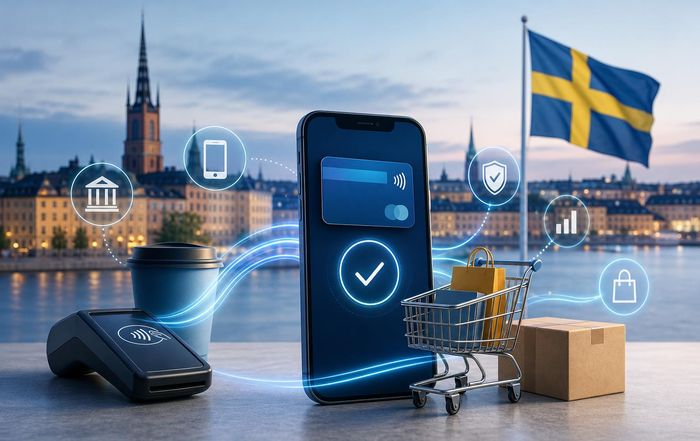
How Swedish Payment Habits Are Shaping Digital Commerce
Sweden is often cited as one of the world's most cash-light societies, and that reputation is not just a curiosity for policymakers and central bankers. The way Swedes pay-dominated by instant mobile transfers, card payments, and a strong trust in digital infrastructure-has become a live experiment in how payment behavior can reshape digital commerce models, business economics, and consumer expectations far beyond the Nordic region.
This educational content explores how Swedish payment habits emerged, how they affect e-commerce and in-store retail, what they mean for fintech and banking innovation, and which lessons other markets can realistically apply.
From cash-light to almost cashless: the Swedish payment landscape
Over the past decade, Sweden has moved from being simply card-centric to becoming a near-cashless ecosystem. According to the Sveriges Riksbank (Sweden's central bank), cash now accounts for only a very small share of point-of-sale transactions, and a growing number of merchants no longer accept physical notes at all. Card penetration is high, contactless is standard, and mobile payments have become deeply embedded in everyday life.
A defining feature is Swish, a real-time mobile payment system launched in 2012 by a consortium of major Swedish banks in cooperation with the Riksbank and the national clearing house. Swish is linked to bank accounts, uses phone numbers as identifiers, and enables instant peer-to-peer, consumer-to-business, and increasingly business-to-business transfers. It has become so ubiquitous that many small merchants, street vendors, and even charity collections prominently display Swish QR codes instead of card terminals or cash boxes. The service has also benefited from strong digital ID infrastructure via BankID, which underpins secure authentication across banking, government, and private services.
At the same time, Sweden is home to Klarna, one of the most prominent global "buy now, pay later" (BNPL) providers, and a dense ecosystem of digital banks and payment fintechs. This combination of instant mobile payments, high card usage, and embedded consumer credit options has created a payment environment where friction is low, digital trust is relatively high, and experimentation with new commerce models is encouraged.
For international readers interested in fintech and payments, Sweden offers a preview of what commerce looks like when cash is largely absent and when account-to-account and alternative credit rails are mature. It also illustrates some of the challenges that come with that shift, including inclusion, resilience, and regulatory scrutiny.
How Swedish payment habits rewire online checkout experiences
Swedish consumers have grown accustomed to extremely streamlined online checkout flows. This has pushed merchants and payment providers to prioritize speed, minimal data entry, and strong default options in ways that directly influence conversion and basket size.
In Sweden, it is common for online checkouts to present invoice and BNPL options-through providers such as Klarna, Svea, or other local players-alongside or even ahead of card payments. Consumers often choose to pay by invoice after delivery or split payments over time, without entering card details. For many, this feels safer than storing card credentials and more flexible than immediate debit. As a result, BNPL has become not just a financing tool but a default payment habit, especially in fashion, consumer electronics, and lifestyle e-commerce.
At the same time, Swish for e-commerce has gained traction. By scanning a QR code or confirming a push notification in the Swish app, consumers authorize instant account-to-account payments without entering card numbers or logging into bank interfaces manually. This has reduced checkout abandonment for merchants that integrate Swish, especially on mobile devices where form-filling friction is highest.
These habits influence digital commerce in several ways. First, they raise expectations for one-tap or near-instant checkout, pushing merchants to integrate payment methods that feel native to consumers' daily lives. Second, they shift transaction economics away from card schemes toward account-to-account and BNPL rails, affecting fee structures and settlement times. Third, they expand the range of viable business models, from subscription bundles to micro-transactions, because the payment layer can handle small amounts with low friction.
For companies operating cross-border, this means Swedish shoppers often expect to see Klarna, Swish, or similar options at checkout, and may be less tolerant of clunky card-only flows. International merchants that rely solely on card payments may find lower conversion in Sweden than local competitors that offer familiar payment methods. This is where global PSPs and local acquirers compete intensely to localize checkout experiences.
Readers interested in the broader e-commerce context can explore how payment preferences intersect with business models in our coverage of fintech and payments and online business trends.
Mobile-first behavior and the rise of instant account-to-account payments
The ubiquity of Swish has made instant account-to-account (A2A) payments feel natural to Swedish consumers. What started as a peer-to-peer tool quickly extended into retail, e-commerce, and bill payments. This matters for digital commerce because it shows how fast A2A can move from a niche alternative to a mainstream rail when user experience, identity, and bank cooperation align.
Swish leverages the existing banking infrastructure and the Riksbank's clearing systems to move funds in real time. The consumer experience-selecting a contact, entering an amount, confirming with BankID-is simple enough that it competes directly with cash and card for small everyday transactions. For merchants, especially small businesses and gig workers, Swish offers a low-friction way to accept digital payments without investing in full POS hardware, which has helped accelerate the decline of cash even in micro-commerce scenarios.
This behavior aligns with broader European trends around open banking and instant payments under frameworks like PSD2 and the forthcoming Instant Payments Regulation. While the European Union as a whole is working to expand instant A2A usage, Sweden offers an example of what happens when consumers internalize A2A as the default. It influences how they pay utility bills, how they split costs in social settings, and how they interact with both physical and digital merchants.
Internationally, similar patterns are visible in systems such as PIX in Brazil, UPI in India, and Faster Payments in the UK, all of which are studied by institutions like the Bank for International Settlements. Sweden's experience is part of this global shift toward real-time account-based infrastructure that runs parallel to card networks. For readers following global payments and regulation, our banking and economy sections frequently examine how these rails are reshaping financial services.
BNPL, credit culture, and their impact on digital retail
Sweden's payment habits are also defined by a distinctive relationship with short-term credit. BNPL and invoice-based payments were popular in the Nordic region long before they became a global trend, and companies like Klarna built large businesses around the idea that consumers prefer to receive goods before paying.
For digital commerce, this has several implications. First, Swedish shoppers are comfortable with deferred payment at checkout, which can raise average order values and improve conversion for discretionary purchases. Retailers often highlight "pay in 30 days" or "split into three payments" as prominently as price discounts, and consumers view these options as part of the core value proposition.
Second, the normalization of BNPL has pushed merchants to compete not only on product and price but also on payment flexibility. E-commerce platforms and marketplaces integrate multiple BNPL providers, and traditional banks have responded with their own short-term credit offerings or flexible card repayment features.
Third, regulatory and consumer-protection scrutiny has intensified. Authorities such as Finansinspektionen (the Swedish Financial Supervisory Authority) and the European Banking Authority have raised concerns about over-indebtedness and the transparency of BNPL terms. This is part of a wider international debate, with regulators like the UK Financial Conduct Authority and the US Consumer Financial Protection Bureau examining BNPL models. Sweden, as an early and heavy user of BNPL, is watched closely for evidence on both the benefits and risks of embedding credit into everyday checkout flows.
For digital commerce players, the Swedish case illustrates how deeply payment methods can influence consumer psychology. When paying later becomes habitual, shoppers may be more open to trying new brands or making larger purchases, but they also become more sensitive to how credit terms and fees are communicated. The regulatory push for clearer disclosures and affordability checks is likely to shape product design and marketing in Sweden and abroad.
Readers tracking the intersection of consumer credit, regulation, and fintech will find related coverage in our security and compliance and world sections.
Trust, digital identity, and the infrastructure behind Swedish habits
Payment habits do not emerge in isolation; they are supported by institutional trust and technical infrastructure. In Sweden, BankID plays a pivotal role as a widely adopted electronic identification system used for banking, government services, and private platforms. This shared identity layer reduces friction across the entire digital economy, including payments and commerce.
When consumers can authenticate securely with a familiar mechanism, they are more willing to authorize payments, sign contracts, and share data online. This underpins not only Swish and online banking, but also e-commerce account creation, subscription management, and high-value transactions that might otherwise require in-person verification. It also facilitates compliance with anti-money-laundering and know-your-customer rules enforced by regulators like Finansinspektionen and aligned with broader standards from bodies such as the Financial Action Task Force.
The broader context is a high level of trust in public institutions and banks, combined with strong digital literacy. Surveys from organizations like OECD and Eurostat have consistently shown that Nordic countries rank highly on internet usage, online banking adoption, and digital public services. This environment makes it easier for new payment methods to gain traction, because consumers do not see digital financial services as inherently risky.
For digital commerce, this means Swedish users often accept strong customer authentication, multi-factor prompts, and data sharing with less resistance than in markets where trust is lower or where identity infrastructure is fragmented. Merchants can design flows that are both secure and streamlined, relying on BankID rather than multiple proprietary login systems. This is a key difference from markets where identity is more siloed and where onboarding can still be a major friction point.
Readers interested in how digital identity and trust shape financial services can explore related themes in our AI and security and education coverage, especially where digital literacy and user behavior intersect.
Retail, point-of-sale, and the decline of cash
Swedish payment habits have transformed not only online commerce but also physical retail. Many shops, cafés, and service providers prominently display signs indicating that they are cash-free, accepting only cards and digital payments. This has been facilitated by affordable mobile POS solutions, widespread card ownership, and the availability of Swish as an alternative for smaller merchants.
For retailers, going cashless simplifies operations: there is no need to manage cash drawers, arrange armored transport, or reconcile physical notes. It also reduces certain types of theft and can speed up service during peak times. For digital commerce, the key effect is the convergence of online and offline experiences. Consumers use the same cards, mobile wallets, and apps across channels, and loyalty programs or subscriptions can more easily bridge physical and digital journeys.
However, the decline of cash has sparked debate about financial inclusion and resilience. The Riksbank and other authorities have warned that certain groups-such as older citizens, people with disabilities, or those without full access to banking services-may be disadvantaged in an environment where cash is rarely accepted. There are also concerns about what happens during large-scale outages of digital systems, whether due to cyber incidents, infrastructure failures, or crises.
These issues have prompted regulatory and policy responses, including requirements for certain institutions to ensure access to cash and ongoing discussions about the role of a potential central bank digital currency (CBDC), the e-krona. The Riksbank has been one of the more advanced central banks in exploring CBDC design, although no decision to launch has yet been taken. For digital commerce, a future in which central bank money is available in digital form alongside private payment instruments would add another layer to Sweden's already complex payment ecosystem.
The interplay between cash, digital payments, and CBDCs is a recurring theme in global debates about the future of money, with institutions like the European Central Bank and the International Monetary Fund publishing research and pilot findings. Sweden's trajectory offers useful data for other jurisdictions considering how far and how fast to push toward a cash-light society.
Lessons for global fintech and digital commerce players
For international companies and policymakers, Swedish payment habits are instructive but not automatically transferable. Several contextual factors-such as high digital literacy, strong institutional trust, and a relatively concentrated banking sector-have enabled Sweden's rapid payment transformation. Nevertheless, there are practical lessons for digital commerce and fintech operators in other markets.
One clear takeaway is the importance of local payment methods. Just as Swish and Klarna are essential in Sweden, other countries have their own preferred instruments, from iDEAL in the Netherlands to PIX in Brazil or UPI in India. Merchants that want to maximize conversion and customer satisfaction need to treat payment localization as a core part of market entry, not an afterthought. Our world and crypto and digital assets coverage frequently highlight how regional preferences shape product design.
Another lesson is the value of strong digital identity infrastructure. Sweden's experience suggests that when a widely trusted, interoperable identity system exists, it becomes easier to layer secure payments, lending, and digital services on top. Markets that lack such infrastructure may face higher onboarding costs and greater fraud risk, which can slow the adoption of advanced commerce models.
A third insight is the strategic impact of instant A2A rails. As regulators and central banks-from the European Commission to the US Federal Reserve with FedNow-promote real-time payments, businesses can look to Sweden to understand how consumer expectations shift when "instant" becomes normal. This affects everything from refund policies and payout schedules to subscription billing and marketplace disbursements.
Finally, Sweden illustrates that regulation and consumer protection inevitably follow innovation. BNPL, cashless retail, and data-rich identity systems raise legitimate questions around privacy, inclusion, and debt sustainability. Fintechs and merchants that anticipate these issues-designing transparent products, offering clear opt-outs, and building contingency plans for outages-are likely to be more resilient as regulatory scrutiny increases.
Where Swedish habits may point next
As Sweden continues to experiment with cash-light living, real-time payments, and embedded credit, its payment habits will keep influencing digital commerce design both domestically and internationally. Global PSPs already treat Sweden and the wider Nordic region as a testing ground for advanced checkout flows, while regulators and central banks watch closely to understand the trade-offs of rapid digitalization.
For digital commerce operators, the Swedish experience underscores a simple but powerful principle: how people pay is as strategic as what they buy. Payment preferences shape conversion, loyalty, risk, and regulation. In Sweden, those preferences have evolved toward instant, mobile, and flexible forms that blur the boundaries between banking, retail, and technology.
As other markets deepen their own instant payment and digital identity infrastructures, many will face similar choices about cash usage, BNPL regulation, and the balance between convenience and resilience. Observing how Sweden navigates these tensions offers valuable insight for founders, banks, policymakers, and investors shaping the next generation of global digital commerce.
For ongoing news of how payment innovation intersects with business models, jobs, and regulation worldwide, global thinking people can explore our pages on fintech, business, jobs and skills in finance and tech, and green and sustainable finance, where evolving payment habits increasingly influence everything from consumer behavior to environmental impact.
