
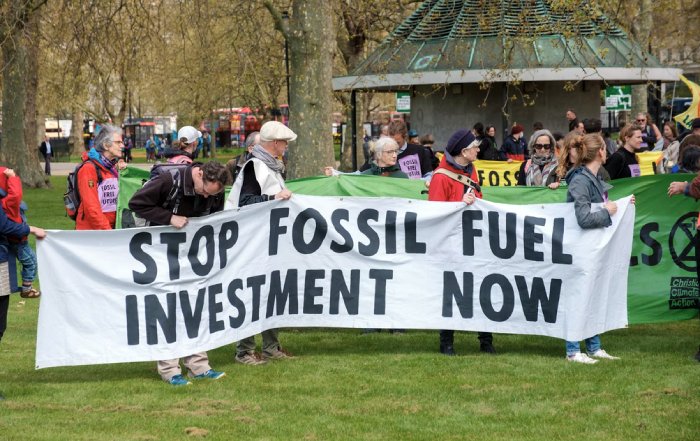
Climate-Focused Finance in 2026: From Niche Agenda to Core Financial Infrastructure
A New Center of Gravity for Global Capital
By 2026, climate-focused finance has moved decisively from the margins of capital markets to their operational core, reshaping how banks, asset managers, fintech platforms, regulators, and corporates across North America, Europe, Asia-Pacific, Africa, and South America define value, risk, and long-term competitiveness. What began in the mid-2010s as a proliferation of "green" labels and voluntary ESG commitments has matured into a structural reconfiguration of financial flows, governance expectations, and technology stacks. For institutional investors in the United States and Canada, universal banks in the United Kingdom and the European Union, sovereign wealth funds in the Middle East and Asia, and development finance institutions in Africa and Latin America, climate considerations are now inseparable from credit risk, market risk, and strategic planning.
For FinanceTechX, whose readership spans senior executives, founders, technologists, and policy professionals, this shift is not a theoretical evolution but a practical, day-to-day reality. Across the verticals covered on FinanceTechX, from fintech transformation and global banking to green fintech innovation and the wider world economy, climate-focused finance has become a defining lens through which capital allocation, product design, and regulatory strategy are assessed. For decision-makers in the United States, United Kingdom, Germany, France, Canada, Australia, and increasingly in fast-growing markets such as Brazil, South Africa, India, and Southeast Asia, the question is no longer whether climate finance will matter, but how quickly organizations can embed it into their operating models without undermining profitability or resilience.
From Broad ESG Narratives to Climate-Centric Strategy
The journey from broad ESG narratives to precise, climate-centric strategies has been shaped by converging scientific evidence, economic realities, and political dynamics. Repeated assessments by the Intergovernmental Panel on Climate Change (IPCC) have narrowed the margin for error in keeping global warming close to 1.5°C, while the intensification of physical climate impacts-from wildfires in North America and Southern Europe to floods in Germany and China and heatwaves across India and the Middle East-has forced investors to confront the inadequacy of historical risk models. As a result, asset owners and managers in markets as diverse as the United States, the Nordics, Singapore, and Japan increasingly treat climate risk as a core financial variable, not a reputational or philanthropic concern.
Leading institutions including BlackRock, HSBC, UBS, and major pension funds in the Netherlands, Canada, and Australia have refined their climate strategies from high-level net-zero pledges to detailed sectoral pathways, interim targets, and portfolio alignment metrics. The work of the former Task Force on Climate-related Financial Disclosures (TCFD) has been consolidated into the global baseline standards of the International Sustainability Standards Board (ISSB), which many jurisdictions are now embedding into their regulatory frameworks. Executives following FinanceTechX business coverage see that climate-related data, scenario analysis, and board-level oversight are now treated as integral elements of enterprise risk management, capital planning, and investor communication in London, Frankfurt, New York, Singapore, and beyond.
Regulatory Architecture and Policy Momentum in 2026
By 2026, regulatory and policy frameworks have become the most powerful accelerators of climate-focused finance, particularly in Europe but increasingly in North America and Asia as well. The European Union's Sustainable Finance Disclosure Regulation (SFDR) and the EU Taxonomy for Sustainable Activities have moved from initial implementation to refinement and enforcement, compelling asset managers, insurers, and banks to substantiate sustainability claims with granular data and consistent methodologies. The European Central Bank (ECB) and national supervisors in Germany, France, Spain, and Italy have integrated climate risk into their supervisory review processes, while climate stress tests are now a recurring feature of prudential oversight.
In the United Kingdom, the Financial Conduct Authority (FCA) and the Bank of England continue to refine climate disclosure and risk management expectations, positioning London as a leading hub for transition finance and sustainability-linked instruments. In the United States, the Securities and Exchange Commission (SEC) has advanced mandatory climate-related disclosure rules for public companies, aligning them in part with ISSB standards and reinforcing the requirement that material climate risks be treated alongside traditional financial risks. Readers can explore how global standard-setters are shaping this landscape through resources from the Organisation for Economic Co-operation and Development and related policy institutions.
Across Asia, regulators such as the Monetary Authority of Singapore (MAS), the Financial Services Agency of Japan (JFSA), and authorities in South Korea, Hong Kong, and China are converging on more consistent taxonomies, disclosure regimes, and supervisory expectations. MAS has continued to position Singapore as a regional sustainable finance hub through environmental risk guidelines, blended finance platforms, and green bond grant schemes, while Japan and South Korea expand transition finance frameworks tailored to their industrial bases. In emerging and developing economies from Brazil and Chile to South Africa, Thailand, and Malaysia, central banks and securities regulators are collaborating through the Network for Greening the Financial System (NGFS) to adapt global best practices to local contexts and mitigate the risk of regulatory fragmentation.
The Maturing Toolkit of Climate-Focused Financial Instruments
The growth and sophistication of climate-focused financial instruments is one of the clearest indicators that climate finance has become mainstream. Green bonds have evolved from a niche segment to a core asset class for sovereigns, supranationals, and corporates seeking to finance renewable energy, low-carbon transport, green buildings, and climate-resilient infrastructure. Data from organizations such as the Climate Bonds Initiative show that cumulative issuance has surged well beyond the trillion-dollar threshold, with the United States, China, France, Germany, the United Kingdom, and the Nordic countries among the largest issuers, and growing participation from Brazil, Mexico, South Africa, and ASEAN markets. Investors can follow these trends through resources at the Climate Bonds Initiative.
Sustainability-linked loans and bonds, which tie the cost of capital to the borrower's performance against emissions reduction or other sustainability targets, have become integral to corporate treasury strategies in sectors ranging from manufacturing and logistics to consumer goods and real estate. Large corporates in Europe, North America, and Asia increasingly view these instruments as tools to operationalize transition plans, not just as branding exercises. Guidance from institutions such as the International Finance Corporation and the World Bank continues to shape best practices in structuring, verification, and impact measurement, particularly in emerging markets where concessional capital and risk-sharing mechanisms remain critical.
Transition finance has gained particular prominence in 2026 as policymakers and investors recognize that decarbonizing heavy industry, aviation, shipping, and agriculture is essential to meeting global climate goals. Rather than relying solely on exclusion and divestment, financial institutions are experimenting with instruments that support credible decarbonization pathways, from sustainability-linked project finance in steel and cement to blended finance facilities for green hydrogen, carbon capture, and climate-smart agriculture. As FinanceTechX has highlighted in its world and economy reporting, the challenge now lies less in conceptual design and more in ensuring that taxonomies, verification standards, and performance benchmarks are robust enough to differentiate genuine transition from superficial rebranding.
Fintech as the Operational Backbone of Climate Finance
The mainstreaming of climate-focused finance would be impossible without the parallel rise of a sophisticated fintech infrastructure that can capture, analyze, and distribute climate-relevant data at scale. Across the United States, United Kingdom, Germany, the Netherlands, the Nordics, Singapore, and Australia, climate data platforms and fintech providers have become indispensable partners for banks, asset managers, insurers, and corporates seeking to quantify emissions, assess physical and transition risks, and design climate-linked products.
Data providers such as MSCI, S&P Global, and Bloomberg, alongside specialist organizations like CDP (Carbon Disclosure Project), now aggregate corporate disclosures, satellite imagery, geospatial intelligence, and supply chain data into granular emissions profiles and vulnerability maps. These datasets underpin portfolio construction, credit analysis, and regulatory reporting, and they increasingly inform strategic decisions about where to build infrastructure, how to structure supply chains, and which counterparties to prioritize. Those seeking deeper insight into corporate climate performance can explore resources from CDP.
In retail and SME banking, digital-first institutions and neobanks in Europe, North America, and Asia-Pacific are embedding carbon calculators, eco-spending insights, and climate-aligned savings products directly into mobile apps. Customers in markets such as the United Kingdom, Germany, Sweden, and Singapore can now view estimated emissions associated with their payments and investments, round up transactions to support certified climate projects, or access preferential terms for electric vehicles and energy-efficient home upgrades. These capabilities are increasingly integrated with open banking and embedded finance architectures, a trend tracked closely on FinanceTechX's fintech channel, where climate data is treated as a natural extension of financial data rather than a separate layer.
Artificial Intelligence, Climate Analytics, and Risk Intelligence
Artificial intelligence has become central to how financial institutions and corporates interpret climate risk and opportunity in 2026, particularly as traditional models prove inadequate for capturing non-linear climate dynamics and complex interdependencies across sectors and geographies. Machine learning techniques are being deployed to analyze massive, heterogeneous datasets-from satellite imagery of deforestation in the Amazon and Southeast Asia to sensor data from industrial facilities in Europe and North America-enabling more precise estimates of emissions, land-use change, and physical risk exposure.
In capital markets, AI-driven analytics help portfolio managers and credit analysts identify discrepancies between corporate climate narratives and observable data, flagging firms whose transition plans are misaligned with their capital expenditure, supply chain practices, or lobbying activities. Platforms powered by Refinitiv, Moody's Analytics, and other leading providers increasingly integrate climate metrics into credit ratings, equity research, and scenario analysis. Readers interested in the broader convergence of AI and financial markets can explore FinanceTechX's AI coverage, where climate use cases now feature prominently alongside applications in trading, fraud detection, and personalization.
Beyond finance, AI is being applied to optimize energy systems, transport networks, and industrial processes, creating a feedback loop where technological innovation both informs and is financed by climate-focused capital. The International Energy Agency (IEA) has documented how AI-enabled demand response, predictive maintenance, and grid optimization can reduce emissions while enhancing system reliability, particularly in regions integrating high shares of variable renewables. Learn more about these developments through the International Energy Agency, which increasingly frames digitalization and AI as critical enablers of cost-effective decarbonization across advanced and emerging economies alike.
Crypto, Tokenization, and the Digital Infrastructure of Green Assets
The digital asset ecosystem has undergone a profound transformation in its relationship with climate and sustainability. Following the transition of major networks such as Ethereum to proof-of-stake and the proliferation of more energy-efficient blockchains, the debate has shifted from blanket criticism of crypto's carbon footprint to a more nuanced examination of how distributed ledger technologies can support transparent, verifiable, and liquid climate finance markets. In 2026, tokenization of green assets and environmental attributes is no longer an experiment confined to startups; it is increasingly explored by banks, exchanges, and market infrastructures across Europe, Asia, and North America.
Tokenized carbon credits, renewable energy certificates, and nature-based assets enable fractional ownership, enhanced traceability, and near real-time settlement, helping to address persistent challenges such as double counting, opaque registries, and limited liquidity in traditional carbon markets. Platforms aligned with standards from Gold Standard and Verra are using blockchain to create immutable records of project issuance, retirement, and transfer, while integrating geospatial and monitoring data to strengthen environmental integrity. Founders and institutional investors can follow these developments through FinanceTechX's crypto section, where the focus has shifted from speculative trading toward infrastructure for climate and real-world assets.
Central banks and regulators, coordinated in part through the Bank for International Settlements (BIS), are exploring how central bank digital currencies (CBDCs), tokenized deposits, and regulated stablecoins might improve the efficiency and transparency of green bond issuance, cross-border climate project finance, and results-based payment mechanisms. Learn more about these explorations from the Bank for International Settlements, which increasingly frames tokenization as a potential enabler of programmable, conditional capital flows, where disbursements can be tied to verified climate milestones and monitored in near real time.
Banking, Risk Management, and Evolving Fiduciary Duty
Global and regional banks in the United States, United Kingdom, Eurozone, Switzerland, Singapore, Japan, and Australia sit at the center of the climate finance transformation, as they intermediate credit and capital for both high-emitting legacy sectors and emerging low-carbon industries. Participation in initiatives such as the Net-Zero Banking Alliance (NZBA) has pushed many large banks to set sectoral decarbonization targets for power, oil and gas, automotive, aviation, shipping, steel, and real estate, alongside commitments to increase financing for renewable energy, green buildings, and sustainable infrastructure.
Risk management teams are incorporating climate scenarios into credit underwriting, collateral valuation, and portfolio stress testing, using frameworks developed by the Network for Greening the Financial System (NGFS) and leading academic institutions. Supervisors in Europe, the United Kingdom, and parts of Asia now expect banks to articulate how climate risks influence their risk appetite, capital allocation, and client engagement strategies, while North American regulators are gradually tightening expectations despite political debates. Those interested in the technical underpinnings of climate risk modeling can explore NGFS publications, which have become reference points for banks and insurers worldwide.
For banks featured in FinanceTechX's banking coverage, climate-focused finance has become central to the evolving concept of fiduciary duty. Institutional clients in Europe, North America, and Asia increasingly expect their relationship banks to act as partners in transition planning, offering advisory services on decarbonization strategies, access to blended and concessional finance, and introductions to technology providers and ecosystem collaborators. At the same time, retail customers in markets from Germany and the Netherlands to Canada, Australia, and South Africa are demanding products that reflect their climate values, prompting banks to develop green mortgages, EV and heat-pump financing, and climate-aligned savings and investment products that are both competitive and credible.
Founders, Startups, and the Climate Fintech Frontier
For founders and early-stage investors, climate-focused finance has emerged as one of the most dynamic frontiers of innovation in 2026, cutting across payments, lending, asset management, insurance, and corporate services. Climate fintech startups in the United States, United Kingdom, Germany, France, the Nordics, Singapore, and increasingly in India, Brazil, and South Africa are building solutions for carbon accounting, climate risk scoring, sustainable investment platforms, supply chain traceability, and impact measurement. These ventures often require multidisciplinary teams that combine financial engineering, data science, climate science, and regulatory expertise, reflecting the complexity of the problems they address.
Venture capital funds and corporate venture arms have established dedicated climate and sustainability strategies, recognizing both the commercial opportunity and the enabling role these tools play for incumbent financial institutions and corporates. Accelerators in London, Berlin, Amsterdam, Stockholm, Singapore, and San Francisco now routinely feature climate fintech cohorts, while hubs in Nairobi, São Paulo, and Jakarta are nurturing region-specific solutions for smallholder finance, distributed solar, and climate-resilient agriculture. Entrepreneurs and investors can explore founder perspectives and case studies through FinanceTechX's founders section, where climate-focused ventures increasingly occupy center stage.
Blended finance platforms such as the Global Innovation Lab for Climate Finance continue to play a catalytic role, designing instruments that combine public, philanthropic, and commercial capital to de-risk investments in emerging and frontier markets. Resources from the Global Innovation Lab for Climate Finance illustrate how guarantees, subordinated tranches, and results-based payment structures can crowd in private capital for distributed energy, nature-based solutions, and resilient infrastructure in Africa, South Asia, and Latin America. For founders and investors aligned with FinanceTechX's global outlook, these models offer blueprints for scalable and investable solutions that address both climate and development imperatives.
Jobs, Skills, and the Human Capital of Climate Finance
The rapid institutionalization of climate-focused finance has triggered a profound shift in talent requirements across banking, asset management, insurance, consulting, and fintech. Roles such as climate risk analyst, sustainable finance structurer, ESG and climate data engineer, transition strategy advisor, and climate product manager are now embedded in organizational charts from New York, Toronto, and San Francisco to London, Frankfurt, Zurich, Singapore, Tokyo, and Sydney. Financial institutions are recruiting professionals with backgrounds in environmental science, engineering, and public policy, while expecting traditional finance and business graduates to understand climate science basics, regulatory frameworks, and sustainability reporting.
Universities and professional bodies have responded with specialized degrees, executive education programs, and certifications in sustainable and climate finance. The CFA Institute and leading business schools in the United States, United Kingdom, France, Germany, Singapore, and Australia have integrated climate finance modules into core curricula, while online learning platforms expand global access to technical training on topics such as climate risk modeling, sustainable product structuring, and climate policy. Readers navigating career transitions or hiring strategies can follow developments through FinanceTechX's jobs coverage and related education content, which increasingly highlight cross-functional and interdisciplinary skill sets.
This human capital transformation extends beyond front-office or strategy teams. Compliance, legal, internal audit, technology, and cybersecurity functions must all develop fluency in climate-related regulations, data standards, and control frameworks. As climate data becomes mission-critical for risk, reporting, and product development, organizations are investing in data governance, model risk management, and internal assurance capabilities to ensure that climate analytics are reliable, explainable, and aligned with regulatory expectations across jurisdictions.
Security, Integrity, and the Fight Against Greenwashing
As capital flowing into climate-focused products and strategies has scaled, concerns about greenwashing, data integrity, and cybersecurity have intensified. Regulators in Europe, North America, and Asia are scrutinizing whether funds marketed as sustainable or climate-aligned genuinely reflect low-carbon or transition-aligned holdings, and whether banks' and corporates' net-zero commitments are supported by credible plans and measurable execution. Enforcement actions and high-profile investigations in the European Union, United States, and United Kingdom have underscored the reputational, legal, and financial risks associated with overstated or misleading climate claims.
To address these challenges, market participants are increasingly relying on standardized reporting frameworks, external verification, and robust assurance practices. Bodies such as the International Organization of Securities Commissions (IOSCO) and the International Auditing and Assurance Standards Board (IAASB) are working to strengthen the reliability and comparability of sustainability information, including climate disclosures. Those interested in evolving assurance standards can consult the IAASB, which has been developing guidance for assurance engagements on sustainability and climate-related reporting.
At the same time, the digitization of climate finance raises new security and privacy risks. Climate datasets-ranging from corporate emissions inventories and proprietary transition plans to infrastructure vulnerability maps and geospatial intelligence-are increasingly sensitive, both commercially and geopolitically. Manipulation or theft of such data could distort markets, undermine risk models, or expose critical infrastructure vulnerabilities. For readers following FinanceTechX's security coverage, the convergence of cybersecurity, data governance, and climate finance is emerging as a priority domain, requiring encryption, access controls, incident response planning, and cross-border data transfer strategies that reflect both financial and climate regulatory requirements.
Green Fintech and the Road Ahead for FinanceTechX Readers
By 2026, the convergence of climate imperatives, financial innovation, and digital technology has created a durable new architecture for green fintech and climate-focused finance. Across the United States, Canada, the United Kingdom, Germany, France, the Nordics, Singapore, Japan, South Korea, and emerging hubs in Africa and Latin America, industry support is visible not only in public commitments but in concrete changes to capital allocation, product catalogues, risk frameworks, technology investments, and governance structures. For the global audience of FinanceTechX, this is no longer a discrete topic siloed under sustainability; it is a horizontal theme that cuts through economy, banking, world markets, fintech, and green fintech coverage.
Executives, founders, and investors who thrive in this environment are those who treat climate as an integrated component of value creation and risk management rather than a compliance obligation or marketing theme. They invest in high-quality data and analytics, build partnerships with technology providers and climate experts, and cultivate governance structures where boards and senior management own climate strategy. They also recognize regional nuance: the policy architecture of the European Union, the market-driven dynamics of the United States, the transition-oriented frameworks of Japan and South Korea, the blended-finance focus in Africa and South Asia, and the industrial policy lens shaping China's and India's climate finance landscapes.
Global initiatives such as the United Nations Environment Programme Finance Initiative (UNEP FI), the Principles for Responsible Investment (PRI), and the Financial Stability Board (FSB) continue to refine best practices, address systemic risks, and promote cross-border coordination. Readers seeking further guidance can explore resources from UNEP FI, the Principles for Responsible Investment, and the Financial Stability Board, which collectively shape the evolving norms of climate-focused finance. As FinanceTechX continues to track these developments across geographies and asset classes on its global platform, one conclusion is increasingly difficult to ignore: climate-focused finance is not a parallel track to mainstream finance; it is redefining what mainstream finance means in an era of accelerated transition, technological disruption, and heightened expectations of accountability and impact.
